Lauren McDougallJan 29, 20231 min read
Strength training for Cerebral Palsy
For a very long time, it was thought that strength training for individual’s with Cerebral Palsy had the potential to increase muscle spasticity, and therefore do more harm than good. However, this has been debunked, and there’s lots of evidence to suggest that strength training and exercise is incredibly beneficial for individual’s with Cerebral Palsy.
Strength training and exercise has been shown to:
- Improve endurance and physical capacity.
- Improve muscle strength.
- Improve gait patterns and walking speed.
- Improve balance and posture.
- Improve gross motor function.
- Improve flexibility.
Added bonus? All of this can flow on to have the magical effect of improved confidence, self-esteem, and create opportunities for greater participation in activities, and with peers, and greater physical independence.
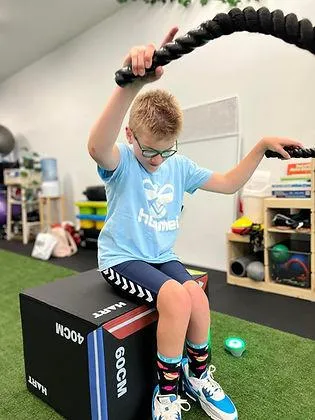
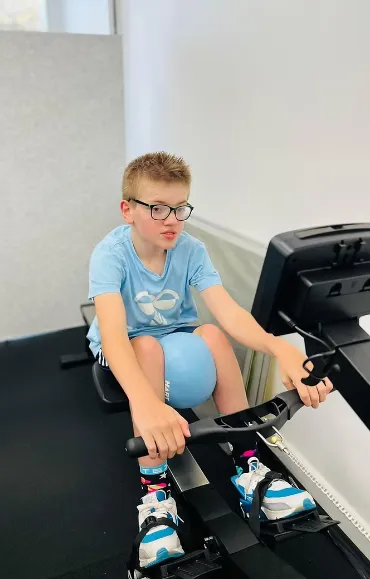
At Achieving Abilities, we do strength training with all our clients with Cerebral Palsy, even our littlest are doing it, just hidden in games and play. For others it might be more ‘sets and reps’ focussed and use weights, machines, bands and body weight.
An Exercise Physiologist can help guide you on safe exercise participation and strength training that is appropriate to the individual and their body. No individual with Cerebral Palsy has the same clinical presentation as another, so individualisation is key to safe progress.
Lauren McDougall June 4 2026
Why movement matters more than you think (especially for kids)
If you’ve ever wondered whether your child is moving enough, you’re not alone.
For many families, “movement” can start to feel like another thing to keep up with—sports, activities, getting outside more, limiting screen time. It can quickly become something that feels like it needs more time, more energy, and more structure than you realistically have.
But movement doesn’t have to look like that.
In fact, some of the most meaningful movement for kids happens in simple, everyday ways.
Movement is more than just exercise
When we think about movement, it’s easy to picture organised sport or structured activities. But for children, movement is much broader than that.
It can look like:
- Playing in the backyard
- Dancing in the living room
- Climbing, jumping, rolling, exploring
- Walking to the car or helping carry groceries
- Getting up and down off the floor
These small, natural movements are not just “filling time”—they’re how children build the foundations for how their bodies feel and function.
It supports more than just physical health
Movement isn’t only about keeping kids “fit” or active.
It plays a role in:
- Energy levels – helping kids feel more alert and less sluggish
- Mood and emotions – supporting regulation and reducing restlessness
- Focus and attention – especially for younger children
- Confidence – as they learn what their bodies can do
Often, when a child is struggling with energy, focus, or behaviour, movement is one of the simplest places to start.
It doesn’t have to be perfect
One of the biggest barriers families face is the idea that movement needs to be done “properly” to count.
The reality is, it doesn’t.
Short bursts of movement throughout the day can be just as valuable as longer, structured sessions. There’s no need for perfect routines or high levels of motivation—especially in busy seasons of life.
What matters most is creating regular opportunities for movement in a way that fits your family.
What this can look like in real life
For many families, it’s not about adding more—it’s about noticing what’s already possible.
That might be:
- Letting kids play on the floor instead of always sitting on the couch
- Encouraging a quick game or movement break between activities
- Walking short distances where you can
- Building small moments of movement into your usual routines
These small shifts often feel more manageable—and are more likely to stick.
A gentle reminder
If things have felt a bit sedentary lately, that’s okay.
Routines change, life gets busy, and energy comes and goes. Movement doesn’t need to be all or nothing.
Starting small, and keeping things simple, is often what makes the biggest difference over time.
If you’re feeling unsure how movement fits into your child’s day, or where to start, support is there to help you find an approach that feels manageable for your family.

📞 0431 048 684
✉️ [email protected]
📍 307 Payneham Road, Royston Park SA 5070



Golden Grove - Payneham - Marden - Ridgehaven