Lauren McDougallJun 21, 20182 min read
Let's talk about childhood obesity
Updated: Mar 29, 2022
Here are some not so fun facts.
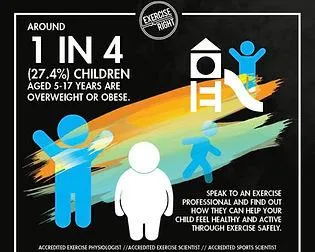
Children and young people in Australia are failing to meet the physical activity guidelines- big time! In 2016, only 21-40% of 5-17 year olds were meeting the recommendations.
So, what does that mean?
Well it’s a huge health concern.
The rate of childhood obesity has never been higher, and with obesity comes a multitude of other health risks. Doctors are now starting to see children and adolescents with health problems they, not too long ago, only saw in adults. Things such as high blood pressure, fatty liver, type 2 diabetes, and coronary artery disease (not cool).
Unfortunately, obese children and young people are 2-3 times higher risk of high blood pressure and reduced insulin sensitivity (a stepping stone to type 2 diabetes, putting them at increased risk of developing diabetes).
Obesity is also linked with lipid abnormalities, specifically triglycerides (AKA a bad fat in your blood), which is doing no favours for your child’s health. These triglycerides can start the inflammatory process within the body (such as in the blood vessels), which lead to conditions such as high blood pressure as they get older. Sound scary? Well it kind of is.
A child can go through their entire childhood obese without having any health problems, however, this doesn’t mean they’re off the hook as an adult. Many of the chronic conditions faced by our adult population start to develop when we are young, meaning that obese children are also more likely to face a wide array of chronic health conditions when they’re adults. They’re also more likely to be obese adults, which means all the nasty stuff keeps happening.
BUT
The good news is we can get on top of it. Most of the chronic health conditions we face in Australia today can be significantly reduced with healthy lifestyle change.
You may read the guidelines and think that’s not reasonable for everyone, and that is the case for some populations - the guidelines are general!
The concept of 'doing some physical activity is better than none' cannot be stressed enough.
Read and repeat:
Doing some physical activity is better than none
Doing some physical activity is better than none
Doing some physical activity is better than none
Exercise is important for EVERYONE, but it’s also important to exercise RIGHT for you.
For those with a disability, or chronic health condition (obesity included!), specific guidance from an Exercise Physiologist may be required to assist with safe, and appropriate, engagement with physical activity.
What guidelines are we failing to meet?
· 5–17 year olds should accumulate at least 60 minutes of moderate to vigorous intensity physical activity every day.
· on at least three days per week, children should engage in activities that strengthen muscles and bones.
· Children 5-17 years should minimise time being sedentary and break up sitting time as much as possible, and limit screen time to no more than 2 hours per day
Lauren McDougall June 4 2026
Why movement matters more than you think (especially for kids)
If you’ve ever wondered whether your child is moving enough, you’re not alone.
For many families, “movement” can start to feel like another thing to keep up with—sports, activities, getting outside more, limiting screen time. It can quickly become something that feels like it needs more time, more energy, and more structure than you realistically have.
But movement doesn’t have to look like that.
In fact, some of the most meaningful movement for kids happens in simple, everyday ways.
Movement is more than just exercise
When we think about movement, it’s easy to picture organised sport or structured activities. But for children, movement is much broader than that.
It can look like:
- Playing in the backyard
- Dancing in the living room
- Climbing, jumping, rolling, exploring
- Walking to the car or helping carry groceries
- Getting up and down off the floor
These small, natural movements are not just “filling time”—they’re how children build the foundations for how their bodies feel and function.
It supports more than just physical health
Movement isn’t only about keeping kids “fit” or active.
It plays a role in:
- Energy levels – helping kids feel more alert and less sluggish
- Mood and emotions – supporting regulation and reducing restlessness
- Focus and attention – especially for younger children
- Confidence – as they learn what their bodies can do
Often, when a child is struggling with energy, focus, or behaviour, movement is one of the simplest places to start.
It doesn’t have to be perfect
One of the biggest barriers families face is the idea that movement needs to be done “properly” to count.
The reality is, it doesn’t.
Short bursts of movement throughout the day can be just as valuable as longer, structured sessions. There’s no need for perfect routines or high levels of motivation—especially in busy seasons of life.
What matters most is creating regular opportunities for movement in a way that fits your family.
What this can look like in real life
For many families, it’s not about adding more—it’s about noticing what’s already possible.
That might be:
- Letting kids play on the floor instead of always sitting on the couch
- Encouraging a quick game or movement break between activities
- Walking short distances where you can
- Building small moments of movement into your usual routines
These small shifts often feel more manageable—and are more likely to stick.
A gentle reminder
If things have felt a bit sedentary lately, that’s okay.
Routines change, life gets busy, and energy comes and goes. Movement doesn’t need to be all or nothing.
Starting small, and keeping things simple, is often what makes the biggest difference over time.
If you’re feeling unsure how movement fits into your child’s day, or where to start, support is there to help you find an approach that feels manageable for your family.

📞 0431 048 684
✉️ [email protected]
📍 307 Payneham Road, Royston Park SA 5070



Golden Grove - Payneham - Marden - Ridgehaven