Lauren McDougallMar 2, 20243 min read
Exercise Physiology.. the missing piece?
Exercise Physiologists are still very much the ‘new kids on the block’ within in the Allied Health world. This is particularly the case in the paediatric space, which has historically been dominated by Physiotherapy, Occupational Therapy, Speech Pathology, and Psychology.
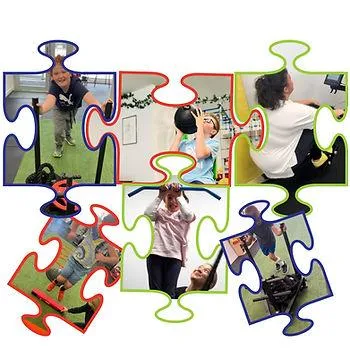
To be clear, Exercise Physiology we aren't plugging Exercise Physiology as a replacement to any of those therapies, we all have our part to play in achieving outcomes for the children and young people we work with. Exercise Physiology may be an extra piece of the puzzle, and in many instances, the piece that makes it all click together.
There are also often long waitlists to access the more ‘traditional’ therapies, leaving children, young people, and their families in limbo while they wait weeks, months, or even years to access a service.
We’ve picked 3 ways Exercise Physiology may be the ‘missing piece’.
Reduced wait-time
With Exercise Physiology still being somewhat less prominent in the paediatric space, often Exercise Physiologists have shorter, or no, waitlists for paediatric services. This allows Exercise Physiologists to provide an individual with support while they wait for input from other allied health professions. In many cases, such as Physiotherapy and Occupational Therapy, there can be overlaps in scope, which means Exercise Physiologists can start the work, or start on certain aspects, in the interim.
For example, At Achieving Abilities, we often see kids who are waiting for an OT or Physio for a range of reasons, including muscle tone and gross motor skills. We can start to get some foundation work done, and in many instances, we continue working on these areas, which frees up the other professions sessions to work on other things such as fine motor skills, regulation, gait etc. So, we’re also a great compliment to those other therapies, allowing everyone to narrow their focus and better use their time.
Fun
Not to say that other therapies aren’t fun – lots of clients love going to their other allied health appointments.
However, given that Exercise Physiology is an entirely movement-based therapy, it’s often perceived as more fun, and feels less like therapy. (This isn’t just our opinion, our clients tell us this!)
At Achieving Abilities in particular, we make sessions enjoyable by tailoring it to the individual, either making it play-based, or more structured ‘gym’ work, or whatever works best for each individual. For some of our older kids, they don’t view coming to see us as “therapy” either, because they love coming and doing exercise in a gym-like space.
Many of our clients even put their own spin on it. One of our favourites is ‘coach’. For one client, his sisters play lots of sport and have coaching, for him, Exercise Physiology is his equivalent, and normalises his ‘therapy’.
Funding
An ongoing battle for families, with or without NDIS, is often the pressure of funding and therapy/service frequency.
In addition often having more availability, Exercise Physiology is also often a more cost-effective alternative. As with the other allied health professions, Exercise Physiology can be funded through Medicare, NDIS, and Private Health rebates.
As with all services, and individual providers and clinicians, it is important that you do what is best. To find out if Exercise Physiology may be for you or your child, chat to one of our team today!
Phone) 0431 048 684
Email) [email protected]
Address) 307 Payneham Road, Royston Park SA 5070
Lauren McDougall June 4 2026
Why movement matters more than you think (especially for kids)
If you’ve ever wondered whether your child is moving enough, you’re not alone.
For many families, “movement” can start to feel like another thing to keep up with—sports, activities, getting outside more, limiting screen time. It can quickly become something that feels like it needs more time, more energy, and more structure than you realistically have.
But movement doesn’t have to look like that.
In fact, some of the most meaningful movement for kids happens in simple, everyday ways.
Movement is more than just exercise
When we think about movement, it’s easy to picture organised sport or structured activities. But for children, movement is much broader than that.
It can look like:
- Playing in the backyard
- Dancing in the living room
- Climbing, jumping, rolling, exploring
- Walking to the car or helping carry groceries
- Getting up and down off the floor
These small, natural movements are not just “filling time”—they’re how children build the foundations for how their bodies feel and function.
It supports more than just physical health
Movement isn’t only about keeping kids “fit” or active.
It plays a role in:
- Energy levels – helping kids feel more alert and less sluggish
- Mood and emotions – supporting regulation and reducing restlessness
- Focus and attention – especially for younger children
- Confidence – as they learn what their bodies can do
Often, when a child is struggling with energy, focus, or behaviour, movement is one of the simplest places to start.
It doesn’t have to be perfect
One of the biggest barriers families face is the idea that movement needs to be done “properly” to count.
The reality is, it doesn’t.
Short bursts of movement throughout the day can be just as valuable as longer, structured sessions. There’s no need for perfect routines or high levels of motivation—especially in busy seasons of life.
What matters most is creating regular opportunities for movement in a way that fits your family.
What this can look like in real life
For many families, it’s not about adding more—it’s about noticing what’s already possible.
That might be:
- Letting kids play on the floor instead of always sitting on the couch
- Encouraging a quick game or movement break between activities
- Walking short distances where you can
- Building small moments of movement into your usual routines
These small shifts often feel more manageable—and are more likely to stick.
A gentle reminder
If things have felt a bit sedentary lately, that’s okay.
Routines change, life gets busy, and energy comes and goes. Movement doesn’t need to be all or nothing.
Starting small, and keeping things simple, is often what makes the biggest difference over time.
If you’re feeling unsure how movement fits into your child’s day, or where to start, support is there to help you find an approach that feels manageable for your family.

📞 0431 048 684
✉️ [email protected]
📍 307 Payneham Road, Royston Park SA 5070



Golden Grove - Payneham - Marden - Ridgehaven