Lauren McDougallAug 23, 20183 min read
Crossing the body's midline
Updated: Mar 29, 2022
The mid-line is an imaginary line down the centre of our body that divides us into left, and right.
Crossing the mid-line refers to the ability to reach across the middle of our body, with our arms and legs, allowing us to perform a task on the opposite side of our body. Difficulty crossing the mid-line of our body can also make visually tracking a moving object quite difficult. It links in with the right side of the brain controlling the left side of the body and vice-versa.
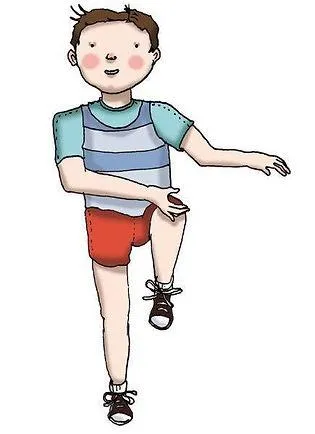
To keep it simple, it's a pretty critical developmental skill needed for success with a number of every day tasks from fine motor skills such as writing, to gross motor skills such as hitting a ball with a bat. Many individuals, with or without, a neurodevelopmental disability, developmental delay or learning difficulties, can have difficulty crossing their mid-line.
These difficulties can impact self-esteem & self-confidence, and lead to an avoidance of physical activity or structured exercise, impacting both physical and mental wellbeing.
From a gross-motor perspective, there are a number of obvious signs for difficulty crossing the mid-line:
• Using the left hand for tasks on the left hand side of their body, and right hand for right side activities.
• Avoiding crossing the mid-line by rotating through their trunk to the opposite side rather than reaching.
• Have difficulty coordinating gross motor patterns such as jumping, skipping etc
The good news? It can be improved.
From an exercise therapy perspective, there are a number of ways we can develop an individual's ability to cross their mid-line during an exercise therapy session. Quite often we practice crossing the mid-line, or the underpinning skills unintentionally, however, there are some specific ways we can put greater emphasis on developing this skill. We need to develop the building blocks required for crossing the mid-line.
For example:
• Bi-lateral coordination - using both the left and right side at the same time (eg - lift right knee and left arm). Before we can cross sides, the two sides need to work well together to do the same thing (think pushing, pulling, climbing, crawling etc).
• Body awareness - develop our proprioceptive ability (the processing of information from our muscles and joints, telling us about our body's position in space
• Core stability - strengthening the muscles of the trunk and back which allow stabilisation of the body to be able to move the arms and legs with control.
• Planning and sequencing ability - developing the ability to process and execute instructions with multiple steps (e.g step through the agility ladder, jump onto the box, step down, catch the ball)
These are the skills underpinning our ability to cross our midline, allowing us to throw and catch, kick a ball, coordinate our way through various forms of structured, and unstructured, physical activity and exercise. If youth lack the confidence, or ability, they are more likely to avoid physical activity, and have preference for sedentary activities.
Building competence is vital for ongoing physical activity and structured exercise participation.
While it may not be the primary concern for intervention, if there is difficulty, an Accredited Exercise Physiologist (AEP) can integrate the development of these building blocks into exercise therapy sessions. Targeted, and purposeful, exercise interventions delivered by an AEP can produce improvements in multiple domains. These may include developing muscle strength, aerobic fitness, balance, mobility and endurance - whatever the individual's goal may be!
Always remember, exercise goes beyond just fitness!
image: http://www.abcdelbebe.com/
Lauren McDougall June 4 2026
Why movement matters more than you think (especially for kids)
If you’ve ever wondered whether your child is moving enough, you’re not alone.
For many families, “movement” can start to feel like another thing to keep up with—sports, activities, getting outside more, limiting screen time. It can quickly become something that feels like it needs more time, more energy, and more structure than you realistically have.
But movement doesn’t have to look like that.
In fact, some of the most meaningful movement for kids happens in simple, everyday ways.
Movement is more than just exercise
When we think about movement, it’s easy to picture organised sport or structured activities. But for children, movement is much broader than that.
It can look like:
- Playing in the backyard
- Dancing in the living room
- Climbing, jumping, rolling, exploring
- Walking to the car or helping carry groceries
- Getting up and down off the floor
These small, natural movements are not just “filling time”—they’re how children build the foundations for how their bodies feel and function.
It supports more than just physical health
Movement isn’t only about keeping kids “fit” or active.
It plays a role in:
- Energy levels – helping kids feel more alert and less sluggish
- Mood and emotions – supporting regulation and reducing restlessness
- Focus and attention – especially for younger children
- Confidence – as they learn what their bodies can do
Often, when a child is struggling with energy, focus, or behaviour, movement is one of the simplest places to start.
It doesn’t have to be perfect
One of the biggest barriers families face is the idea that movement needs to be done “properly” to count.
The reality is, it doesn’t.
Short bursts of movement throughout the day can be just as valuable as longer, structured sessions. There’s no need for perfect routines or high levels of motivation—especially in busy seasons of life.
What matters most is creating regular opportunities for movement in a way that fits your family.
What this can look like in real life
For many families, it’s not about adding more—it’s about noticing what’s already possible.
That might be:
- Letting kids play on the floor instead of always sitting on the couch
- Encouraging a quick game or movement break between activities
- Walking short distances where you can
- Building small moments of movement into your usual routines
These small shifts often feel more manageable—and are more likely to stick.
A gentle reminder
If things have felt a bit sedentary lately, that’s okay.
Routines change, life gets busy, and energy comes and goes. Movement doesn’t need to be all or nothing.
Starting small, and keeping things simple, is often what makes the biggest difference over time.
If you’re feeling unsure how movement fits into your child’s day, or where to start, support is there to help you find an approach that feels manageable for your family.

📞 0431 048 684
✉️ [email protected]
📍 307 Payneham Road, Royston Park SA 5070



Golden Grove - Payneham - Marden - Ridgehaven