Lauren McDougallJul 20, 20182 min read
"60mins of what?"
Updated: Mar 29, 2022
The current recommendations for youth tell us ‘at least 60mins of moderate-vigorous exercise per day’.
But what does that mean? Should they run around in circles aimlessly just to meet this?
Well, that would certainly improve their aerobic fitness but that’s about it. It probably wouldn’t promote much improvement in motor skill development, nor would it sell exercise as something enjoyable.
By focussing on the quantitative aspects of physical activity - ('60mins') – it is very easy to overlook critical components for physical activity for youth such as skill development, the social aspect, and the enjoyment factor. These are all vital for a life time of physical activity participation.
So, although they guide us for 'good health', the guidelines don’t really give us any clarity as to WHAT we should be should be doing.
Why this matters?
• Childhood and adolescence is a critical time in the neuroplasticity of developing brains to develop and enhance fundamental movement skills.
• More and more youth are lacking the ability to skilfully execute a number of the fundamental motor skills.
• There has been a measurable decrease in muscular strength and motor skill levels in youth, which is thought to accompany the increasing prevalence of childhood obesity and increasing weight gain.
• There is a bi-directional relationship between physical activity participation and motor
skill development (i.e it goes both ways).
Yes we absolutely need to exercise for health, but physical activity that is purposely designed to enhance both health-related and skill-related components during childhood and adolescence is critical. Motor skills enable youth to participate in physical activity, sport, and increase enjoyment of exercise, as well as improve self-confidence and self-esteem.
insert Accredited Exercise Physiologist here
Purposely designed exercise programs are what we as a profession are all about!
At Achieving Abilities ALL our sessions incorporate both health-related and skill-related components specific to the needs and abilities of an individual. We provide a developmentally appropriate exercise program, which incorporates all of the following into an expertly delivered session:
• Fundamental movement skills
• Specific exercises to target motor deficits
• Strength and conditioning exercises to improve health, independence, capacity for activities of daily living
• Exercises to develop neurocognitive and visual motor feedback
• Consideration to precautions associate with a given condition or individual presentation
• Ticks boxes for enjoyment
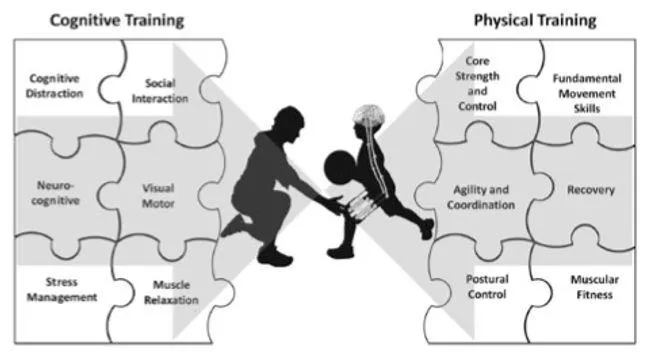
Demonstrating the integration of cognitive and physical training considerations for exercise prescription for youth
Myer, G, Faigenbaum, A, Edwards, N, Clark, J, Best, T & Sallis, R 2015, ‘Sixty minutes of what? A developing brain perspective for activating children with an integrative exercise approach’, British Journal of Sports Medicine, vol.49, pp.1510-1516
Lauren McDougall June 4 2026
Why movement matters more than you think (especially for kids)
If you’ve ever wondered whether your child is moving enough, you’re not alone.
For many families, “movement” can start to feel like another thing to keep up with—sports, activities, getting outside more, limiting screen time. It can quickly become something that feels like it needs more time, more energy, and more structure than you realistically have.
But movement doesn’t have to look like that.
In fact, some of the most meaningful movement for kids happens in simple, everyday ways.
Movement is more than just exercise
When we think about movement, it’s easy to picture organised sport or structured activities. But for children, movement is much broader than that.
It can look like:
- Playing in the backyard
- Dancing in the living room
- Climbing, jumping, rolling, exploring
- Walking to the car or helping carry groceries
- Getting up and down off the floor
These small, natural movements are not just “filling time”—they’re how children build the foundations for how their bodies feel and function.
It supports more than just physical health
Movement isn’t only about keeping kids “fit” or active.
It plays a role in:
- Energy levels – helping kids feel more alert and less sluggish
- Mood and emotions – supporting regulation and reducing restlessness
- Focus and attention – especially for younger children
- Confidence – as they learn what their bodies can do
Often, when a child is struggling with energy, focus, or behaviour, movement is one of the simplest places to start.
It doesn’t have to be perfect
One of the biggest barriers families face is the idea that movement needs to be done “properly” to count.
The reality is, it doesn’t.
Short bursts of movement throughout the day can be just as valuable as longer, structured sessions. There’s no need for perfect routines or high levels of motivation—especially in busy seasons of life.
What matters most is creating regular opportunities for movement in a way that fits your family.
What this can look like in real life
For many families, it’s not about adding more—it’s about noticing what’s already possible.
That might be:
- Letting kids play on the floor instead of always sitting on the couch
- Encouraging a quick game or movement break between activities
- Walking short distances where you can
- Building small moments of movement into your usual routines
These small shifts often feel more manageable—and are more likely to stick.
A gentle reminder
If things have felt a bit sedentary lately, that’s okay.
Routines change, life gets busy, and energy comes and goes. Movement doesn’t need to be all or nothing.
Starting small, and keeping things simple, is often what makes the biggest difference over time.
If you’re feeling unsure how movement fits into your child’s day, or where to start, support is there to help you find an approach that feels manageable for your family.

📞 0431 048 684
✉️ [email protected]
📍 307 Payneham Road, Royston Park SA 5070



Golden Grove - Payneham - Marden - Ridgehaven